Most organizational life cycle models can be summarized into five growth stages: Birth, Growth, Maturity, Decline, and Renewal. Essentially, all businesses eventually hit a decline unless they innovate and start a new growth cycle.
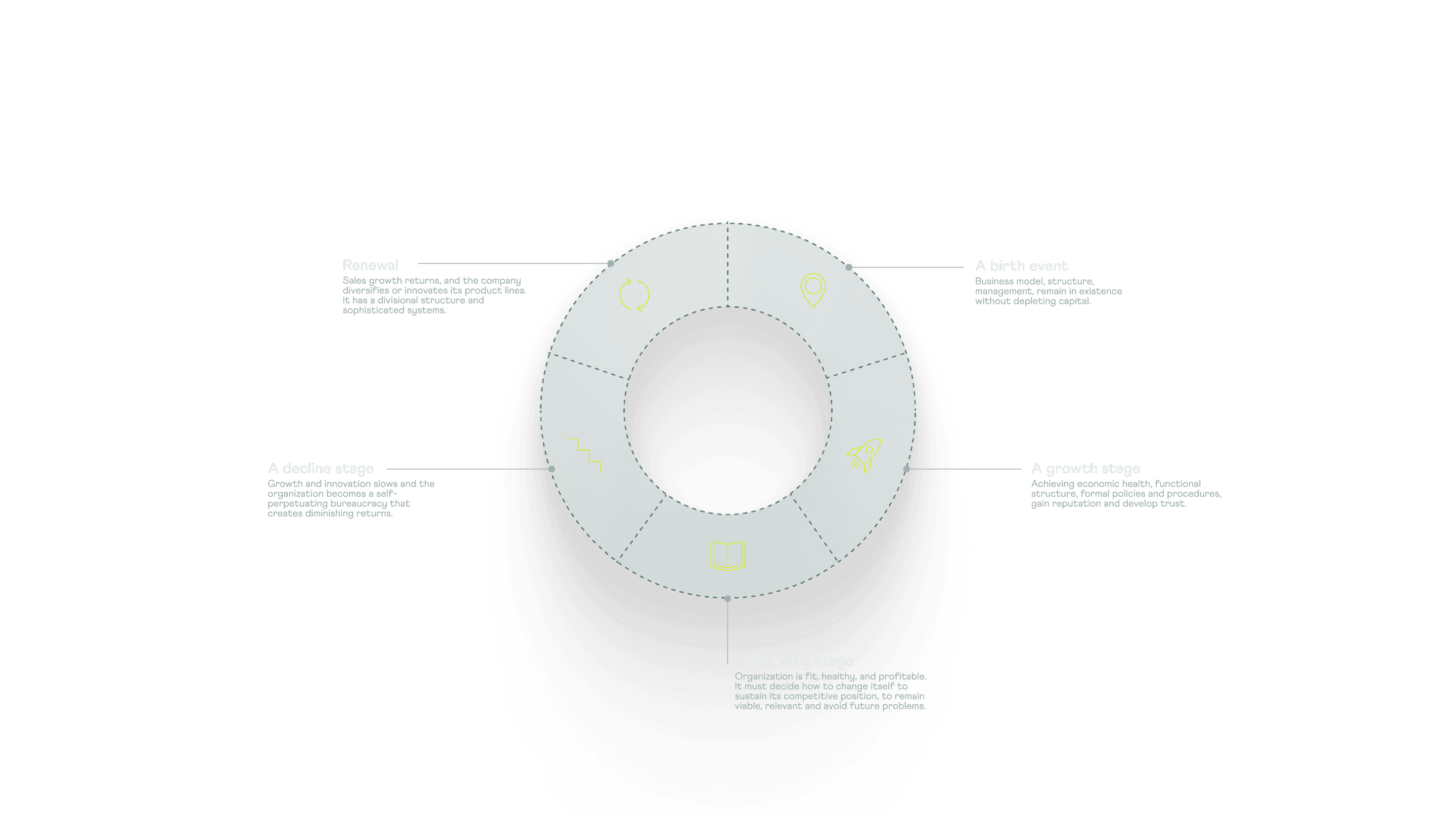
Only a handful of companies have managed to successfully navigate this challenge and according to the Forbes article these are the 20 Companies That Transformed The Landscape Of Iconic Branding. These exceptional brands not only endure over time but also become deeply ingrained in the cultural consciousness across generations. They are instantly recognizable and easy to pinpoint with nothing but color, shape, or a logo.
What’s really interesting about the co-existence of the business and the brand is that they can mature at different rates. In our practice we see that most often the business matures before the brand.
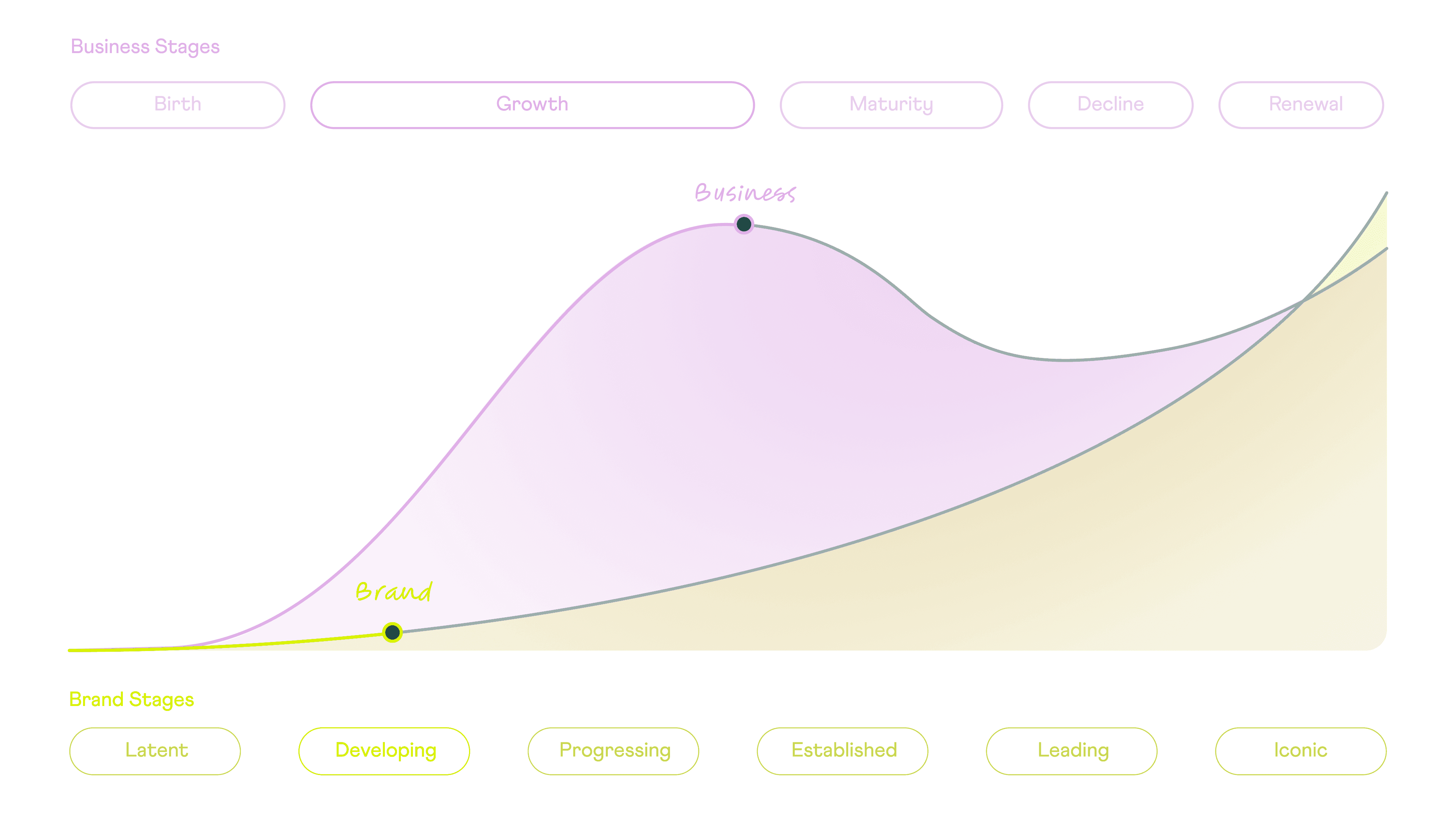
This makes perfect sense, as the brand needs to be managed for what it is - an instrument, a business tool for company growth and profitability. However, a low maturity brand which lacks a cohesive identity can have a counterproductive effect on a growing organization.
Interestingly, this discrepancy isn’t well-covered in existing literature, which often focuses on business maturity. Companies like Coca-Cola, Apple, or Tesla are referred to as brands only after they achieve significant market share and presence.
Why do so many companies fail to manage their brand? Our wild guess is that the companies are faced with the challenge of measuring their brand maturity. As it is suggested by some sources, measuring brand maturity requires setting up external studies with consumers, focussing on metrics such as brand awareness and recall, brand loyalty and advocacy, brand equity, etc. Companies in their early growth stages don’t know how to do it or they think they have no tools and resources to do it.
But here’s the catch: achieving brand awareness and brand equity starts with good brand management within the company. It’s about realizing that brand awareness requires a brand identity in the first place.
So we found an easier way to understand and measure brand maturity - from within the organization. We conceptualized the brand maturity model from our expertise of a branding agency. This article offers a perspective on managing a brand while growing a business, aiming to become iconic.
Brand Maturity: 6 Growth Stages
Our brand maturity model, launched in 2023, defines six stages:
Stage 1- Latent brand (very low maturity)
Lacks strategic direction, cohesive visual identity, voice guidelines, and brand assets, leading to inconsistent messaging and no data optimization tools.
Stage 2 - Developing brand (low maturity)
Begins to establish strategic direction. Shows early signs of visual identity, limited voice guidelines, and a few brand assets. Consistency is low, and data optimization tools are minimally used.
Stage 3 - Progressing brand (increasing maturity)
Has a guiding strategic direction. Visual identity is increasingly cohesive, with comprehensive voice guidelines and more brand assets. Consistency in messaging grows, and data optimization tools are moderately used.
Stage 4 - Established brand (mature brand)
Strong strategic direction aligned with the brand. Consistent, recognizable visual identity, clear voice guidelines, and extensive brand assets. Demonstrates consistent messaging and effective data optimization tools.
Stage 5 - Leading brand (high maturity)
Visionary strategic direction sets it apart. Easily recognizable visual identity supported by extensive brand assets. Consistently delivers messaging and leverages data optimization tools to maintain a competitive edge.
Strage 6 - Iconic brand (highest maturity)
Innovates each strategic decision. Iconic visual identity, instantly recognizable, with well-defined voice guidelines and numerous brand assets. High consistency in messaging, fully leveraging data optimization tools to reinforce iconic status.
Managing Brand and Business growth
Now, let’s look at what brand management aspects need to be considered at each business growth level.
Stage 1 - the Birth
Creating a mature brand in the birth phase of a business is challenging but possible. In practice, a lot of companies kick-off focusing primarily on finding the product-market fit. Structure and management are the main issues at this business stage, and the goal is to remain in existence without depleting capital, the brand is often left on the back-burner.
But what is done at birth exerts a long-lasting influence on market perceptions, according to J.N.Kapferer from ‘The New Strategic Brand Management’. In the early life of a brand, the early acts mould the first and long-lasting meaning of this new name. Once learnt, this memory gets reinforced and stored in long-term memory. Then, a number of selective processes reinforce the meaning: selective attention, selective perception, selective memory. This is why brand images are hard to change: they are like fast-setting concrete.
However, defining a business model and brand strategy are intertwined, especially in positioning statements that shape audience perception. For example, the Business Model Canvas is a strategic exercise that will also cover the brand strategy. But only to a certain extent.
Where the brand strategy needs further development is in establishing a brand’s visual identity which dictates the tone, messaging, and overall brand narrative that will resonate with the target audience.
When this is not done, and, for example, only a logo is created without a broader visual and verbal identity, the brand sets itself up for inconsistency, which can contribute to companies’ badwill. Badwill in the general sense refers to negative public perception and can lead to loss of customers, difficulties in attracting new business, and challenges in retaining top talent.
So the smartest initial step for this first stage of business creation is to focus on establishing a solid visual brand identity which reflects the brand’s personality. An appealing visual identity will motivate the next steps towards brand maturity and can, if needed, be refined in the future.
Another smart move is to establish a regular presence on social media. With consistent posting you start gaining credibility before the business has gained credibility through delivering consistent work and word of mouth.
As we already defined, the limited financial resources can be the reason to ‘save’ on the branding services. Many business owners intend to DYI their brand, however the knowledge and skills barrier to design and strategically develop a brand identity is often too high to do it well enough on their own. The brand remains in its low maturity.
“This is why brand images are hard to change: they are like fast-setting concrete.”
Jean-Noël Kapferer
Brand expert and author of “The New Strategic Brand Management”
Stage 2 - the Growth
At this stage, achieving economic health is crucial. The company has a functional structure and some formal policies yet it still has some difficulty in attracting good personnel and clients. So the key concern is to gain reputation and develop trust.
From the brand maturity perspective we have two stages that go parallel to the business growth stage, and these stages are ‘developing’ and ‘progressing’. At these stages, defining and creating a complete brand identity is the most important issue.
While the developing brand is still rather primitive, the progressing brand is becoming increasingly cohesive.
Next to giving more attention to the company image, the strategy and positioning often remains the point of conversation as the business grows.
One of the recent surveys which asked Why do businesses rebrand? found that the most common reasons for rebranding include repositioning the brand in the market (45%), reflecting a change in target audience (41%), and addressing negative brand perceptions (26%).
So even if the brand identity was created at the business birth, in its growth stage the company is able to better evaluate how the brand identity serves the envisioned brand image.
The ‘Aha!’ moment comes when a company realizes that visual appeal alone isn’t enough. A brand, no matter how visually stunning, is like a silent model—beautiful but mute. Once the model speaks, their attractiveness is either reinforced or diminished. Similarly, for brands, developing and consistently applying a distinct voice in communications is a non-negotiable. It’s this brand voice that often makes or breaks the brand’s appeal.
Therefore, moving from a developing to a progressive brand most of the time entails refining the visual brand identity and developing voice guidelines with a language that accurately represents the brand. There should also be an increased number of unique brand assets created. This may include investing in a professional copywriter or photographer. This will allow the developing brand to have a bigger toolkit to work with, paving the path towards brand consistency and maturity.
Stage 3 - Maturity
Financial resources, right people, and effective systems mark this stage. Yet, brands often lag. Most of our clients are like that, anyway. And we don’t blame them. Most progressing or maturing brands already have a visual brand identity and an increased number of brand assets in place, so it can feel like everything is working well on that front. However, a mature business ≠ mature brand.
Nevertheless, to level up to a mature brand, the company should start redefining its strategic brand direction. By using data, client feedback and market insights, brands can develop an updated vision that guides brand’s actions. This will pave the way for a new life cycle!
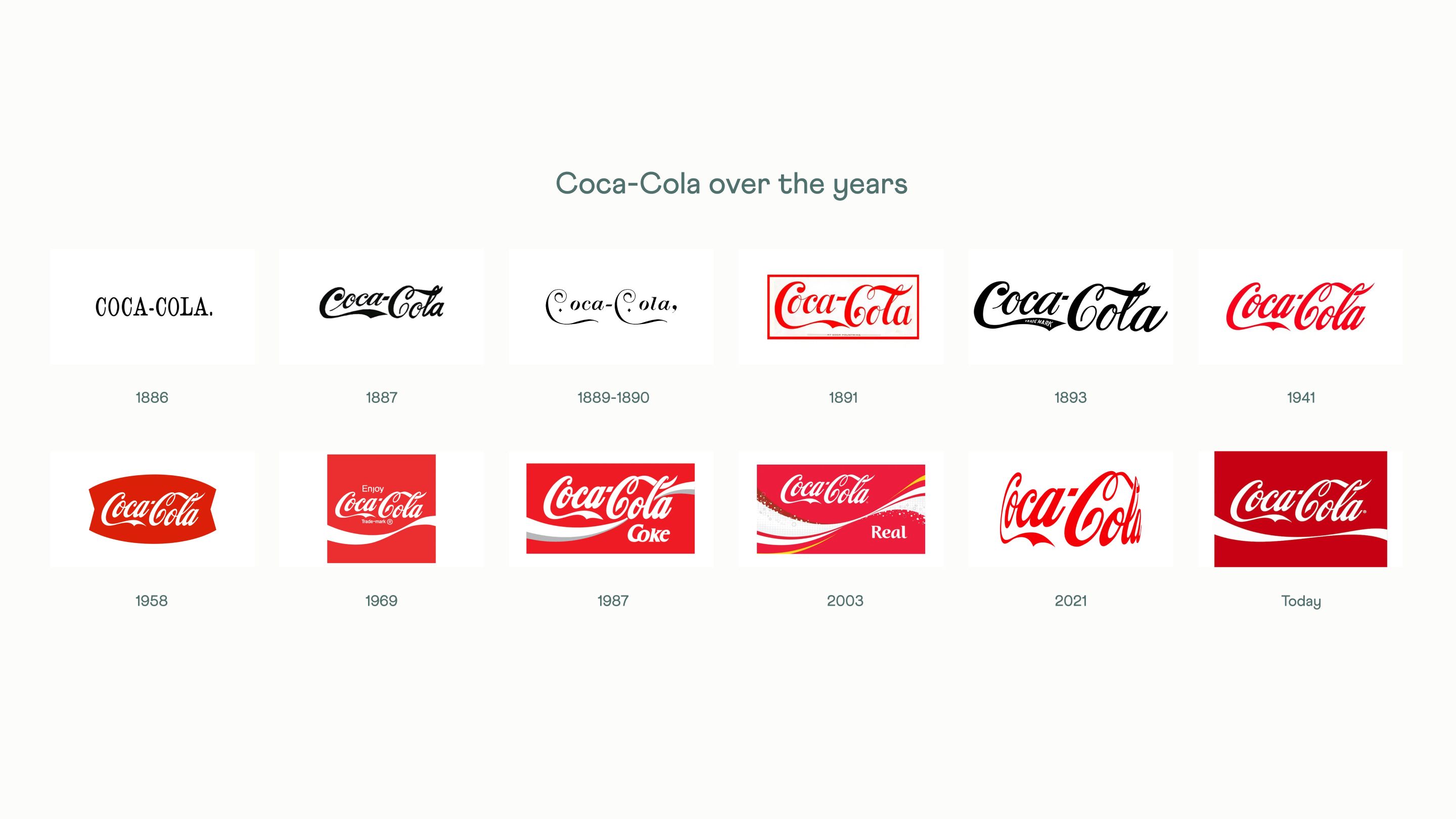
Consistency in all aspects is very important at this stage. Each customer touchpoint, both online and offline, as well as all communication, needs to be professionalized, ‘follow a schedule’ and be ‘on brand’. Great consistency is a reflection of organizational processes and good systems, which at this point are strongly present.
Finally, marketing campaigns and the data received from the campaigns are leveraged to maintain the brand’s competitive edge.
Stage 4 - Decline
A mature business risks going into decline when it fails to stay relevant. Even a mature brand can lose its touch with the audience. If it doesn’t keep up with trends and cultural shifts, competitors will win market share.
Managing consistency is another challenge. As a business grows, it has many touchpoints that need constant updates. Consistency is crucial, yet most declining brands struggle with it.
Updating the visual brand identity or website can sometimes revive a business. However, this is best done during the maturity stage to extend it. If a business reaches the decline stage, re-branding can create friction because the business is already struggling.
To avoid decline, businesses need to rethink their strategy. Align messages across all touchpoints and channels. Follow relevant trends and sometimes create new ones. This is essential for a brand that wants to avoid decline.
Stage 5 - Renewal
When a business succeeded in surviving multiple crises and went through several new life cycles that it became the norm, its brand at this point has gained so much equity that the brand can be considered an iconic brand. We’re talking about the top 1% of brands with the highest level of maturity.
To unleash a full brand’s potential and become an iconic brand, focus should be directed towards a culture that fosters innovation and creativity. Embracing and investing in emerging technologies leads to creative and innovative outcomes. Which in turn leads to a higher competitive advantage and a prominent place in people’s minds.

In conclusion, managing brand and business growth effectively is crucial for achieving iconic status. Our brand maturity model highlights the importance of developing a cohesive brand identity and strategic direction at each growth stage. By prioritizing brand management and leveraging data insights, companies can ensure their brand evolves alongside their business, ultimately becoming a powerful tool for sustained growth and market presence.