Building a brand is a continuous journey that evolves alongside the business itself. In a recent conversation with Egbert Wietses, the founder of Pionect, a software development company specializing in e-commerce and custom software, we explored Pionect's brand development and the challenges they face as they grow to a more mature brand.
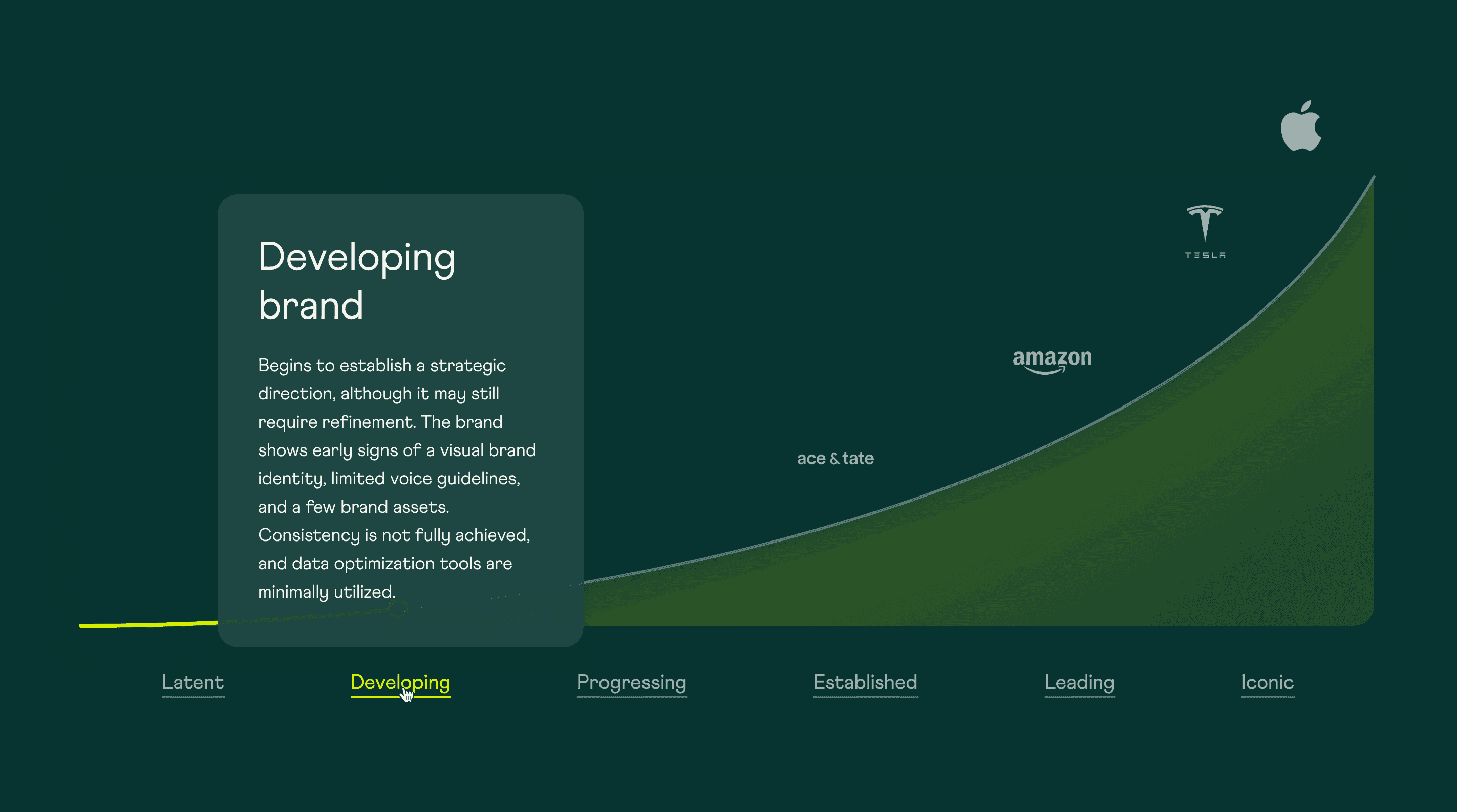
A Developing brand in our Brand Maturity Framework means that it begins to establish a strategic direction, although it may still require refinement. The brand shows early signs of a visual brand identity, limited voice guidelines, and a few brand assets. Consistency is not fully achieved, and data optimization tools are minimally utilized.
From a Name to a Brand
Egbert, the founder of Pionect, described how branding was not an initial priority when starting the company more than 11 years ago. "In the beginning, you're just thinking about a name and what a name should represent," Egbert shared. The name Pionect, a fusion of "pioneering" and "connecting," embodied the company’s vision: creating innovative digital solutions and connecting people or systems.
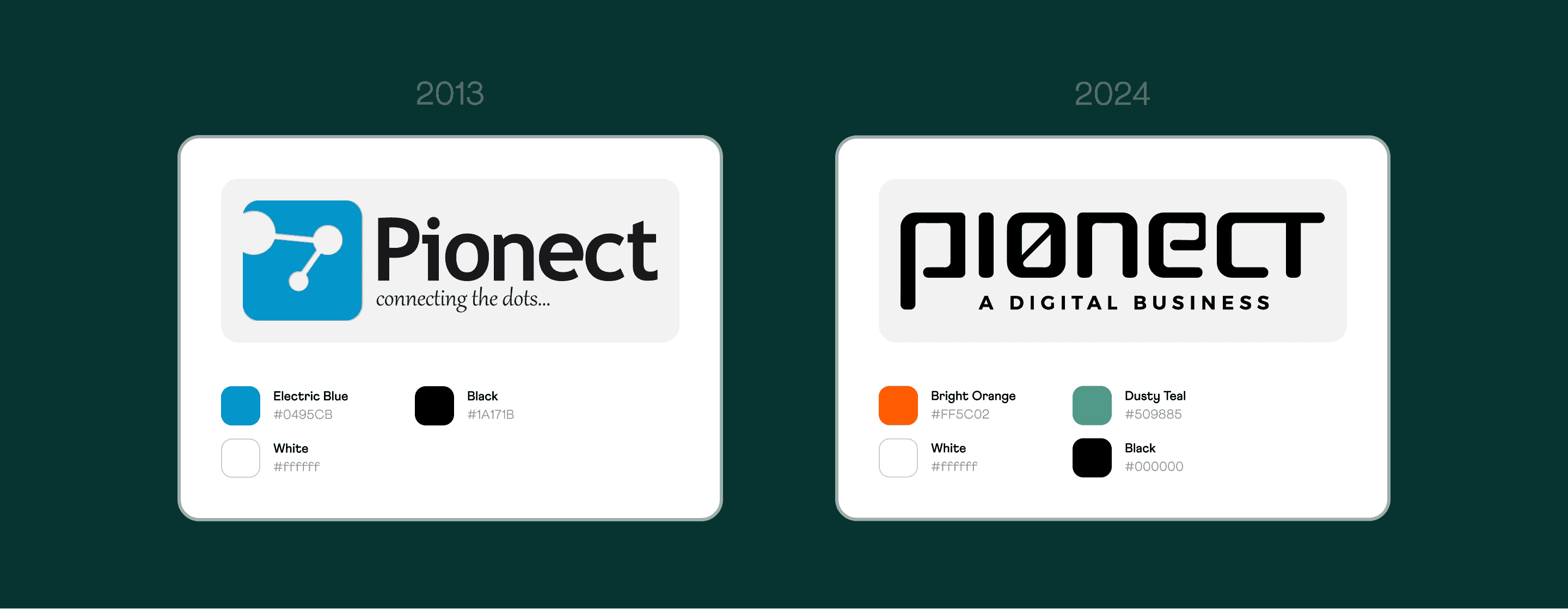
The journey toward building a brand identity began with these simple roots—a name and an idea. "Our first logo was designed by one of our early customers," Egbert explained. The logo reflected the concept of "connecting the dots" through three interlocking circles. As the company evolved, so did the branding, with a shift toward a more business-centric identity. "I wanted to connect more to the idea of a 'digital business,' as this is the direction many companies are moving, regardless of their industry," Egbert added.
The Cyclical Nature of Branding
For many small businesses, especially those with a technical focus like Pionect, branding is often a secondary consideration. Egbert candidly discussed how branding efforts tend to happen in cycles: "In the early days, you set it up and don’t think about it for years. Then, after a while, you realize it feels outdated and refresh it." This cyclical approach to branding—brief periods of intense focus followed by long stretches where the brand remains static—is common in growing businesses.
However, as Pionect aims to scale its operations from 13 to 25 employees, Egbert acknowledges that they can no longer rely solely on word-of-mouth marketing. The company needs a more robust brand presence to reach new clients and foster continued growth.
Addressing the Challenges: Competitor Analysis and Strategy
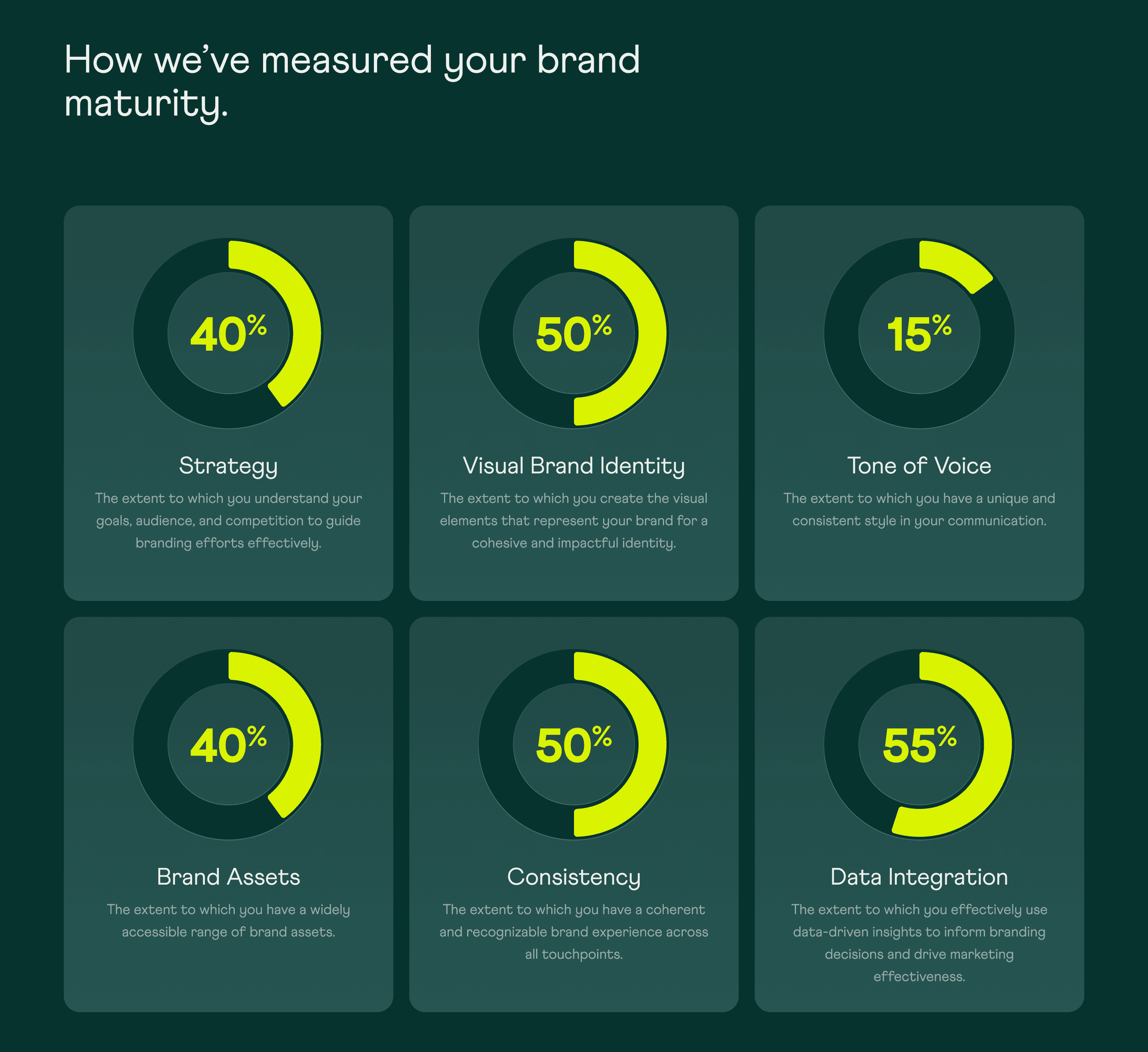
One area where Pionect realizes there is room for improvement is in its strategic approach to branding. The Brand Maturity Scan highlighted a lack of formal competitor analysis as a key gap in their strategy. "We have good competitors out there, but it's not something we've focused on," Egbert admitted. For a company like Pionect, which operates in a niche space focusing on core development rather than design or marketing, competitor analysis has not been a priority. However, as they look to grow, understanding the competition and differentiating themselves will become more critical.
When asked whether Pionect has a clear brand story and positioning, Egbert feels satisfied with the brand's essence but acknowledges that its reach is limited. "Not a lot of people know our story. We need to work on the reach of the company," he explained. In today’s crowded digital landscape, even businesses with a compelling story need strong communication channels to share that story with a broader audience.
Visual Identity: More Than Just a Logo
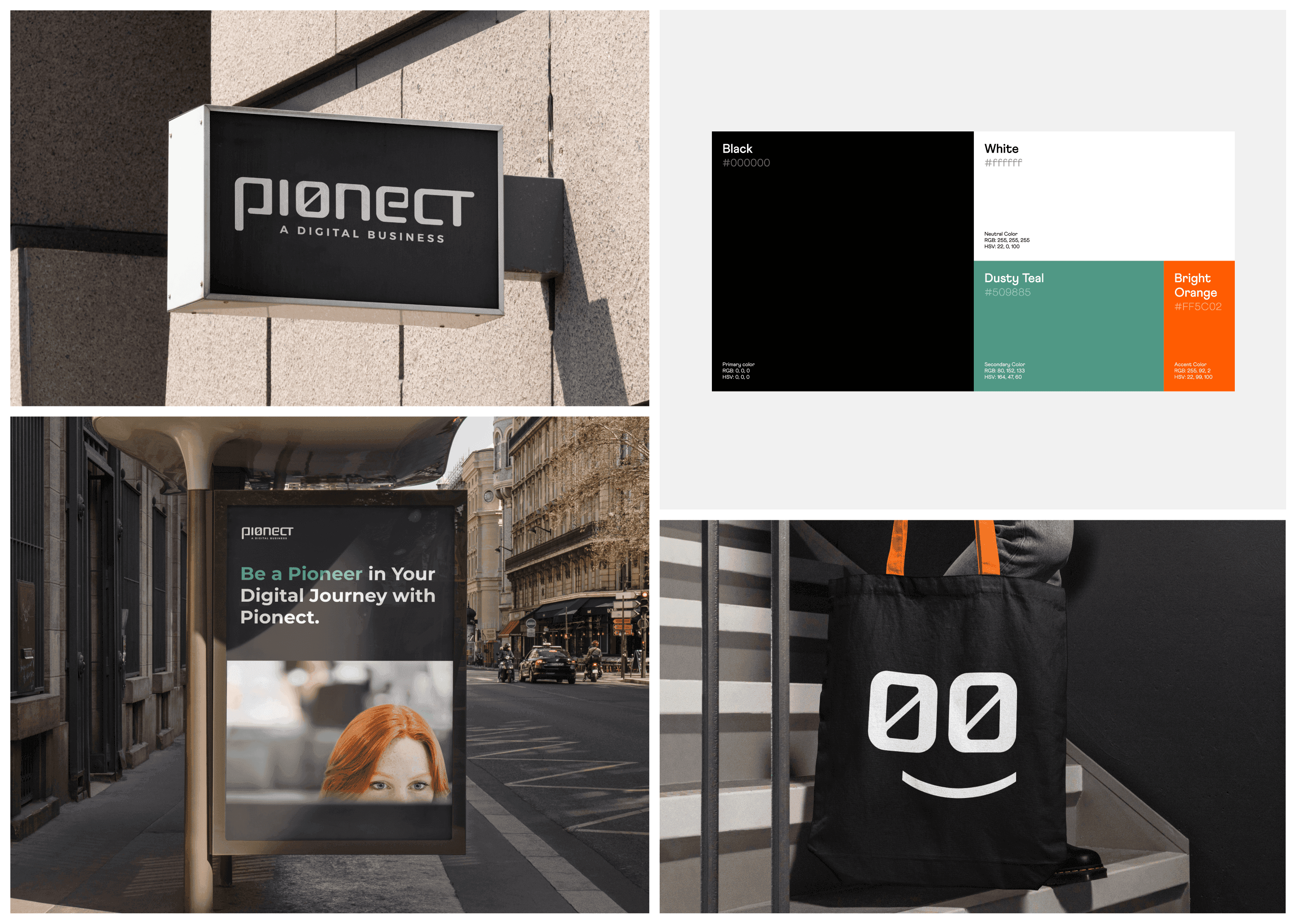
Brand identity goes beyond logos, and Pionect’s visual brand identity—while beginning to show some signs of development—still has room for refinement. The logo, colors, and typography were defined early on but have remained largely unchanged since. "Beyond the color scheme and typography, there hasn’t been much additional definition," Egbert shared.
Brand Voice: Finding the Right Tone
The tone of voice emerged as one of the lower-scoring areas in the brand maturity scan. Egbert described Pionect’s struggle with finding a balance between a casual and professional tone: "We are a young team, but the work we do is quite serious, and it can involve a lot of money." The challenge lies in maintaining a voice that reflects the company’s expertise and the gravity of their work, without sounding too dry or corporate.
This is where brand voice guidelines can help. By defining clear principles, Pionect can maintain consistency in communication across channels, while allowing for some flexibility in tone. As the company grows and more team members contribute to its communications, establishing these guidelines will become increasingly important.

The Importance of Consistency
Consistency in brand communication is essential, especially as a company grows and its messaging spreads across multiple platforms. Egbert credits Saskia’s efforts in recent months for improving Pionect’s consistency, especially in digital channels like social media. "Before, we were very invisible in that regard," Egbert said, "but now we have more content lined up and are more visible."
A recurring challenge for the team, especially Saskia, has been sourcing appropriate imagery for their content. The complexity of their work—building custom software solutions—doesn’t always lend itself to easy visualization. "Finding the right imagery can be difficult, especially when you're dealing with something abstract like software," Egbert noted.
“The challenge with consistency is that it requires continuous effort. The more branded assets you produce, the more you risk the brand becoming diffuse if it isn’t clearly defined and monitored.”
The Role of Data and Competitor Insights
Data plays a significant role in shaping Pionect’s future brand strategy, although Egbert acknowledged that it's a gradual process. "Data is important long-term, so I think you need to look at the data and invest in optimizing it and getting it better. But it's not something that will happen overnight," he remarked. For now, Pionect reviews its analytics quarterly to assess whether they are moving in the right direction. As the company scales, data will likely play a more central role in refining the brand and driving performance.
One area where data already provides value is in competitor analysis. Tools like SEMrush allow Pionect to see where competitors are spending money online, which Egbert finds particularly insightful. "You don’t always have to reinvent the wheel. Sometimes, you can learn a lot just by looking at what your competitors are doing and improving on it."
Next Steps for Pionect
Looking ahead, Pionect plans to continue refining its brand, focusing on several key areas:
Developing Brand Voice Guidelines: Striking the right balance between professionalism and approachability is crucial.
Strengthening Visual Consistency: More cohesive imagery, potentially through regular photo shoots, will help solidify the brand’s identity.
Monitoring and Using Data: Continuing to use competitor insights and analytics to inform future decisions.
Pionect’s brand journey is ongoing, with plenty of room for growth and refinement. As the company scales and its brand matures, the lessons learned from the brand maturity scan will serve as a valuable roadmap for future development.
Read the next interview with a Progressing Brand.