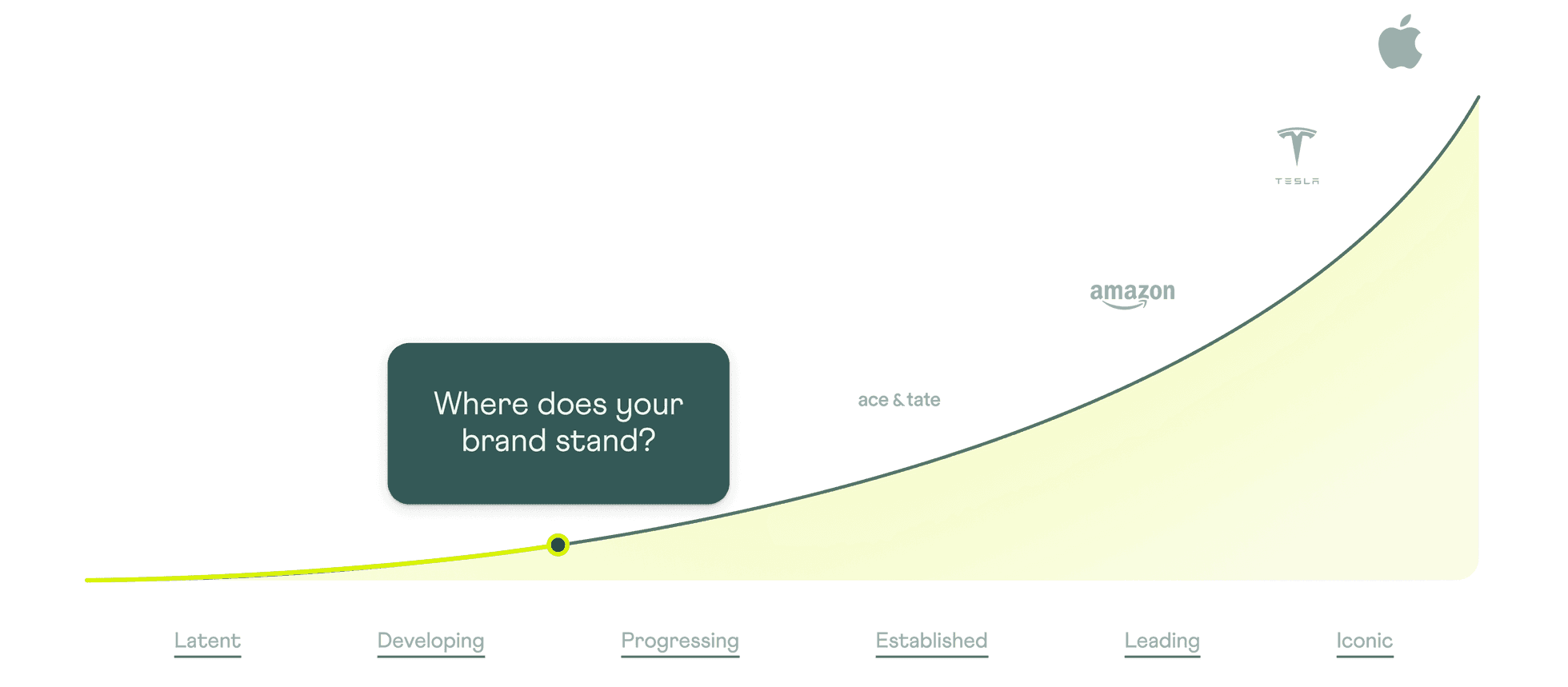
Branding is a high-stakes game. The world’s top brands, like Apple and Tesla, are valued in the billions and stand on the highly-mature side of the brand maturity spectrum. But what about start-ups and smaller companies? Should brand maturity be your top priority?
What is Brand Maturity?
Brand maturity refers to the stage of development of a brand, reflecting how well it is established, recognized, and trusted within its industry and among customers. Brands exist on a spectrum of maturity, ranging from low (latent) to high (iconic).
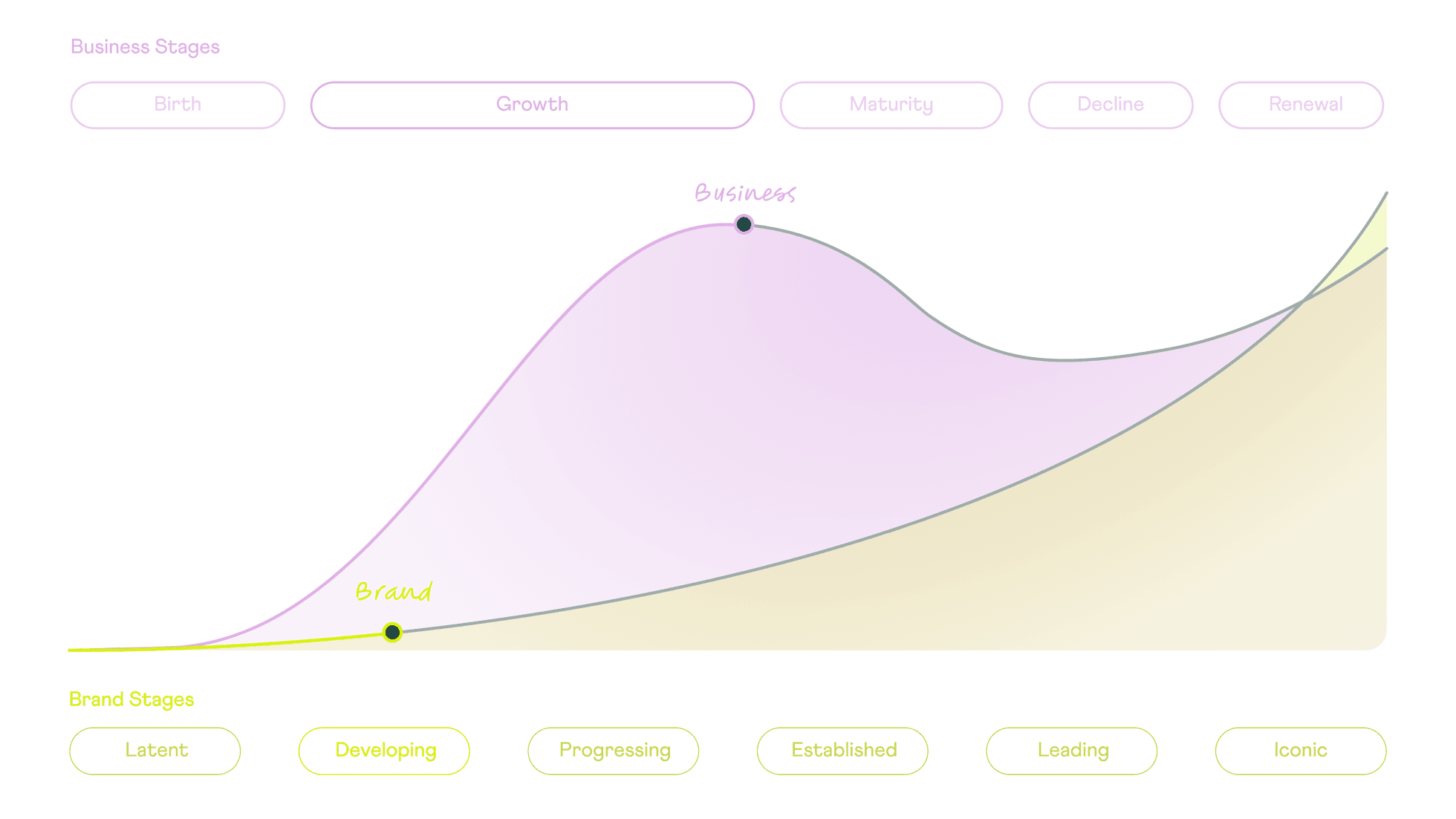
Brand Maturity vs. Business Maturity
It is important to distinguish brand maturity from business maturity. While the two often coexist, they tend to develop at different rates. For many businesses, their operations and processes are more mature than their brand. When a brand fails to keep pace with business growth, several challenges can arise: customers may struggle to connect with an outdated or inconsistent brand image, market differentiation becomes harder, and the brand risks losing relevance in a competitive landscape. Furthermore, a stagnant brand can hinder the ability to attract new customers or retain existing ones. While business maturity can sometimes signal the beginning of a decline phase, a mature and evolving brand can drive sustained success and help bridge the gap until the next business growth cycle begins.
Brand Equity vs. Brand Maturity
Brand equity is a hallmark of a mature brand. Only established (mature) brands can start building brand equity, which allows them to charge premium prices, gain increased market share, and enjoy enhanced negotiating power. Conversely, many brands fail to reach this mature stage. These brands often lack clear meaning, strategy, and consistency, relying instead on product benefits to compete in crowded “red oceans.” As a result, low-maturity brands lack brand equity and are worth significantly less than their mature counterparts.
Brand Equity allows you to:
charge premium prices
gain increased market share
enjoy enhanced negotiating power
benefit from the customer loyalty

Measuring Brand Equity vs. Brand Maturity
Brand equity represents the value a brand holds for customers, whereas brand value reflects the worth of the brand to management and shareholders. While measuring brand value is useful, the act of measurement alone will not make a brand more valuable. Quantifying and managing brand equity, however, is critical to transferring value to shareholders.
“Brand equity represents the value a brand holds for customers.”
M. K. TiwariSeparation of Brand Equity and Brand Value. Global Business Review.
Why growing Brand Maturity is challenging — and how to overcome It
Given that branding is just one of many business processes, businesses often lack the time and financial resources to prioritize brand management amidst daily operations. But it becomes manageable with the right approach. To grow your brand maturity, follow these steps:
Step 1: Do the Brand Maturity Scan: Understand where you brand stands on the brand maturity spectrum.
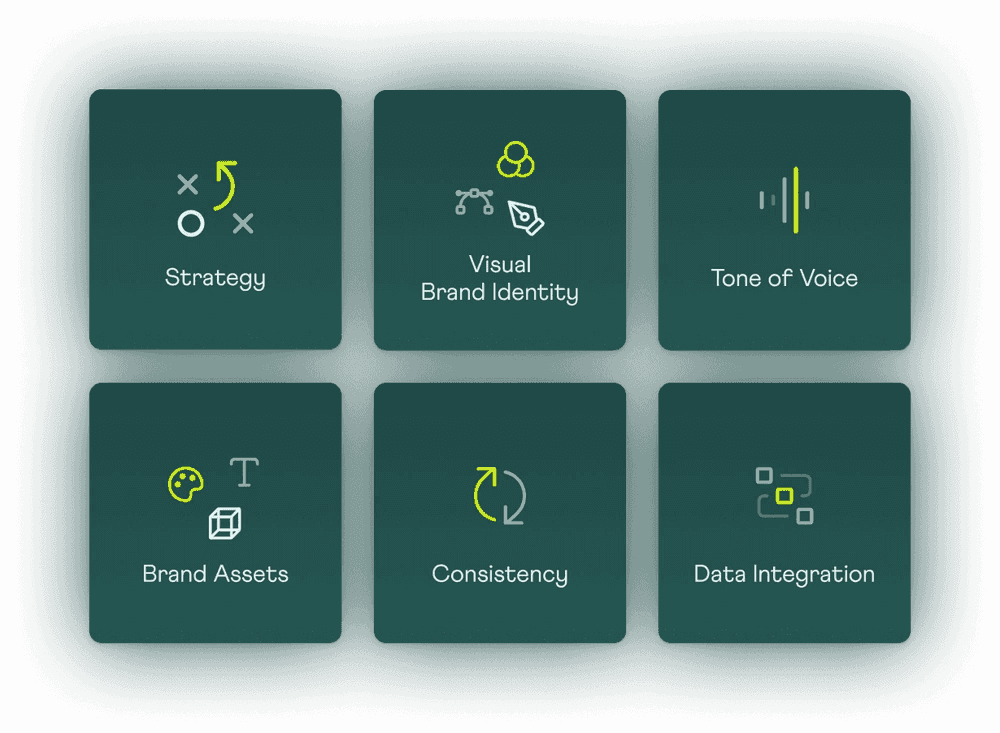
Step 2: Develop a unique brand strategy: Clearly define your brand’s purpose, values, and positioning to stand out in the market.
Step 3: Update and refine your brand identity: Ensure your brand visuals, messaging, and tone are cohesive and reflect your unique value.
Step 4: Ensure consistent application: Apply your brand elements uniformly across all touchpoints, from marketing materials to customer interactions.
Step 5: Integrate data-driven insights: Use analytics to understand brand performance and guide strategic decisions.
Step 6: Listen to customer feedback: Regularly gather and act on customer input to align your brand with their evolving needs.
Commit for the long term. Brand maturity isn’t a one-time effort—it requires continuous investment and discipline. Allocating resources to brand management must be a strategic priority for organizations that aim to attain the highest valuation. This commitment is not easy but is essential for long-term success.
Conclusion
Brand management, centered around the concept of brand maturity, is vital for businesses looking to achieve long-term growth and stability. While brand equity is often seen as the ultimate goal, brand maturity provides the foundation for this value. While it does not need to be the top priority in business, a mature brand stage should be achieved within the first business life cycle.
Time to act